What Is a Wire Transfer? A Practical Guide Before You Send

What is a bank wire transfer?
A bank wire transfer is an electronic payment that sends money from one bank account to another through a bank transfer system. It can be domestic, between accounts in one country, or international, between countries. You give your bank payment instructions; the participating institutions process the payment and credit the recipient according to the route used.
The words on a payment screen can be confusing. “Bank transfer” is a broad label, while “wire” describes a particular transfer method. A card payment, a wallet transfer and an ACH payment are not automatically bank wires. In the United States, ACH uses a separate network. Ask which method the provider will actually use rather than relying on the button name.
This matters when you receive an invoice or instructions in English. If someone asks specifically for a wire, confirm that their account can receive the method and currency you plan to send. A familiar-looking account number alone is not enough to answer that question.
How a wire transfer reaches the recipient
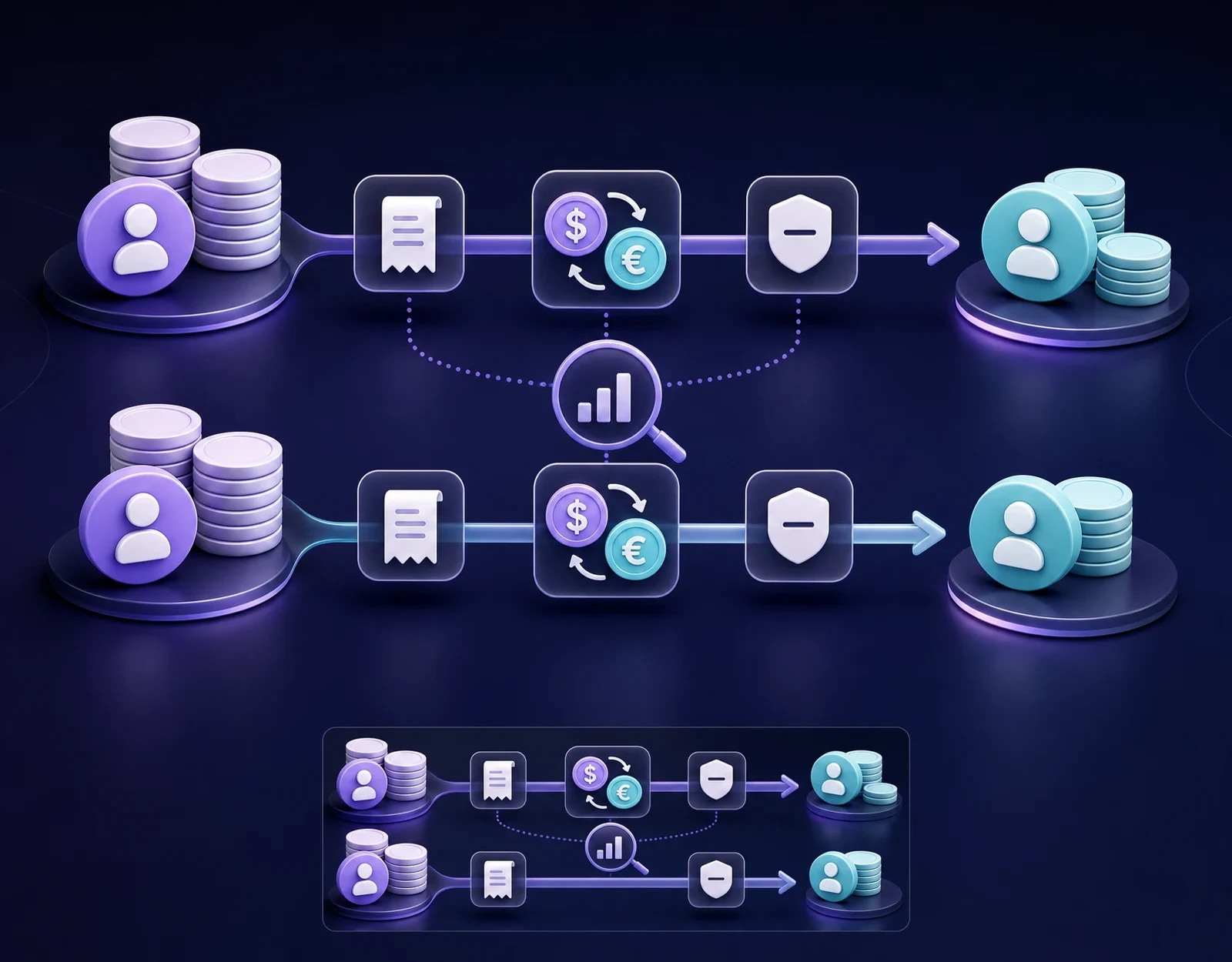
A simple way to understand the process is to separate your instruction from the recipient’s access to the money. Those are different stages, even when your app displays a single progress bar.
- You enter the beneficiary, account details, amount, currency and any required payment reference.
- The sending institution checks the instruction and processes it under its own conditions.
- The payment travels through the relevant banking arrangements. An international route may involve intermediary banks.
- The receiving institution processes the incoming payment and makes funds available under its account conditions.
SWIFT is often mentioned in international bank payments. It is a financial messaging network used by institutions to exchange payment instructions; it is not the recipient’s account and does not itself hold your money. Not every bank transfer uses SWIFT.
A status such as “submitted” or “sent” may describe the sending side only. Before promising a payment date to another person, ask what the provider’s status labels mean and which event confirms availability to the recipient.
Which details should you prepare?
Start with instructions supplied by the recipient’s bank for the exact account, currency and payment route. Requirements vary by country and institution. A useful preparation list is:
- The recipient’s full name as recorded on the account and any required address.
- The account number or account identifier, such as an IBAN where applicable.
- The receiving bank’s name and the bank identifiers requested for this route, which may include a SWIFT/BIC or domestic routing code.
- The sending and receiving currencies, amount and a clear payment reference.
- Any additional information or documents specifically requested by the provider.
An IBAN identifies an account; a SWIFT/BIC identifies an institution. One is not a substitute for the other. Our guide to IBAN and bank details explains how to approach the account information.
Copy details carefully and compare them with the original instructions before submitting. A format check cannot establish that an account belongs to the intended person. If a required field is unclear, ask the provider instead of guessing or inserting a placeholder.
What should you check about cost and timing?
Look at the full quote, not just the headline transfer fee. For a payment involving currency conversion, record the amount debited, currencies, exchange rate, stated charges and the expected amount received. Ask whether intermediary or receiving-bank deductions are included, excluded or unknown.
For example, imagine paying an overseas invoice for an agreed amount in the recipient’s currency. The useful question is whether that amount will reach the account, not simply whether the sending fee looks small. This is a general comparison exercise, not a TopSend price quote. See our guide to comparing transfer costs for a separate cost checklist.
Timing also depends on the specific route. Ask about the submission cutoff, relevant working days, possible checks and the expected availability date. Plan from the provider’s current estimate for your payment rather than assuming every wire is immediate. If a deadline matters, clarify what happens when the estimate is missed before you confirm.
How to verify the request before paying
Confirm both the person requesting payment and the destination account. If an invoice arrives with changed bank details, verify the change through a previously trusted contact channel. Do not use only the new phone number or link included in the same message.
Pressure to act immediately, keep the payment secret or transfer money to a supposed “safe account” is a reason to pause. Open your bank or payment service through its known app or address. Never give another person your login password or one-time authentication codes to help them “receive” a transfer.
A genuine banking channel does not prove that a seller or payment request is legitimate. Consider how you know the recipient and what evidence you have for the purchase or obligation. Our guide to avoiding transfer scams covers these checks in more detail.
What to keep and what to do after sending
Save the confirmation, payment reference, date, amount, currencies and the quote you accepted. Keep records in a private place and share only the details needed for the recipient to identify the payment. A screenshot from a sender is not a substitute for the recipient checking their own account.
If the money has not arrived within the provider’s estimate, check the status and contact the sending institution through an official channel. Give the reference and ask what stage the payment has reached and whether an investigation is needed. Avoid sending the payment again just because the recipient cannot yet see it.
If you spot an incorrect account or suspect fraud, contact the provider immediately and ask what cancellation or recovery options remain. Do not assume a completed wire can be reversed: options depend on the transfer stage, applicable rules and the institutions involved.
When exploring an international payment, review TopSend’s services and confirm the methods and conditions currently available for your destination. This guide explains bank wires generally; the actual options for a particular transaction must be checked in the service before you proceed.