What Is a Routing Number? ACH, Wire and SWIFT Differences

A recipient in the United States sends you bank details, and the transfer form asks for a routing number. Is that the account number, the SWIFT code, or something else? The answer depends on which field you are filling in and how the payment will reach the recipient.
A US routing number is a nine-digit identifier for a financial institution. It does not identify the recipient’s individual account. Before sending money, confirm both the payment method and the bank instructions for that method. A correct-looking number is only one part of a complete set of details.
What a routing number identifies
You may see the labels ABA routing number, routing transit number or RTN. ABA refers to the American Bankers Association. These labels describe the US bank-routing identifier, rather than a personal account identifier or a tracking reference for one transfer. The number has nine digits, including any leading zero.
The routing number and account number have different jobs: one helps identify the financial institution, while the other identifies an account there. Do not swap them because a form appears to accept either entry. A card number is another identifier altogether and should not be substituted for bank account details.
A bank can have more than one routing number. Its instructions may distinguish between payment methods or where an account was opened. Consequently, searching for a bank name and copying the first number you find is not enough to establish the correct details for a particular recipient.
ACH and wire: match the number to the method
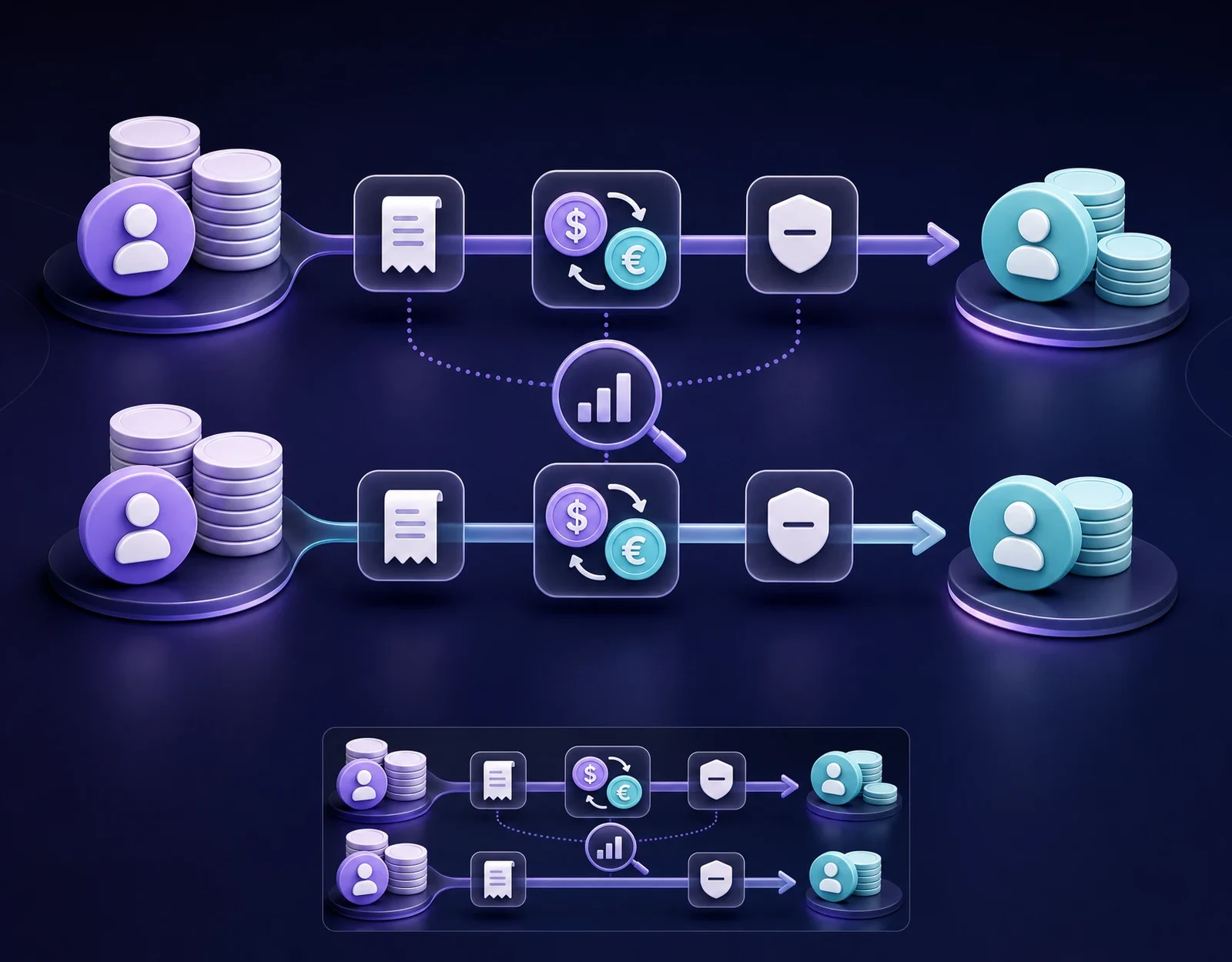
ACH stands for Automated Clearing House. ACH payments and wire transfers use different payment systems, and a bank may provide different routing instructions for them. An ACH routing number is still an ABA routing number; “ABA” does not automatically mean “wire only.” Read the payment-method label beside the number.
For example, imagine that a recipient sends a direct-deposit form, but your provider offers a domestic wire transfer. Do not assume the routing number on that form works for a wire. Ask the recipient for the bank’s incoming wire instructions and confirm that your selected service can use them.
Some banks use the same number for multiple payment types; others do not. Neither pattern should be guessed. If the form says only “routing number,” ask the provider which payment method it means. Do not choose a different method simply to make an unfamiliar field disappear.
The number itself does not tell you the fee, delivery estimate, transfer limit or eligibility of an account. Check those terms separately in the provider’s current quote. A payment method that works for one recipient is not evidence that it is available for another country, currency or account.
Routing number, SWIFT/BIC and IBAN
A routing number belongs to the US routing system. A SWIFT/BIC identifies an organisation, commonly a bank, for financial messaging. An IBAN identifies a bank account in countries that use that standard. These identifiers serve different purposes and are not interchangeable entries for a single field.
For an international payment to a US account, the receiving bank’s instructions may include a SWIFT/BIC, a routing number, an account number and other information. The exact combination depends on the route and provider. Follow the full instructions rather than deciding that an international transfer always needs only a SWIFT code.
If a form requests an IBAN but the recipient provides US bank details without one, stop and confirm whether you selected the correct destination and payment method. Do not invent an IBAN or paste a routing number into that field. For more context, read our guides to SWIFT codes and IBAN and bank-detail checks.
How to find and confirm the right details
Ask the recipient to obtain current receiving instructions from their bank’s authenticated app, online banking or support channel. The request should specify the payment type and currency. A saved screenshot, an old invoice or a number remembered from a previous transfer may not describe the route you are using now.
A routing number may appear on a cheque, but that alone does not prove it is appropriate for an incoming wire. A directory can help check which institution a number identifies or its participation in a payment system. It cannot confirm who owns an individual account or whether your intended recipient is trustworthy.
Reconfirm changed bank details through a contact method you already know. For example, call the recipient using a previously verified number rather than the contact details in the message announcing the change. Share account information only through the bank’s or provider’s secure channel; never send passwords or one-time login codes with it.
A checklist before you send
Keep the recipient’s instructions beside the transfer form and compare each field separately. This is especially useful when you are sending to a new account or changing a saved beneficiary. Before you authorise the payment, check:
- The destination country, currency and payout method match the intended transfer.
- The recipient’s account-holder name matches the bank instructions.
- The routing number has all nine digits and is confirmed for the selected payment method.
- The account number is in its own field, with no missing leading digits.
- Any requested SWIFT/BIC, bank address or intermediary-bank details match the receiving instructions.
- You have reviewed the amount, disclosed fees, exchange rate, delivery estimate and payment reference.
Suppose you are paying an invoice in US dollars and receive two routing numbers labelled ACH and wire. The currency alone does not decide which one to use. First identify the method your sending provider will use, then match it to the corresponding receiving instructions. If either side cannot confirm the match, pause the payment.
You can review TopSend’s product overview on the services page and open the app to check the options shown for your transfer. This guide does not establish that TopSend supports ACH, Fedwire or a particular US bank route. Use the available in-app details and ask support about any unclear field before confirming.
What if you entered the wrong number?
If you spot an error after submitting, contact the sending bank or provider promptly through its official channel. Give the transaction reference and explain which detail may be wrong. Ask about the payment’s current status and whether correction, cancellation or a recall request is possible. Do not assume any of these actions will succeed.
Avoid sending a replacement payment until the provider clarifies the first one. An incorrect routing number does not guarantee an immediate rejection, and a delayed status is not proof that no money moved. Keep the confirmation and your support correspondence so that the provider can investigate without confusing two separate transactions.
Can you use any routing number belonging to the same bank? Only use one the bank confirms for that account and method. Does a valid routing number prove the recipient’s identity? No. Does it replace an account number? No. The practical rule is to confirm the complete receiving instructions, then enter each item in its designated field.